
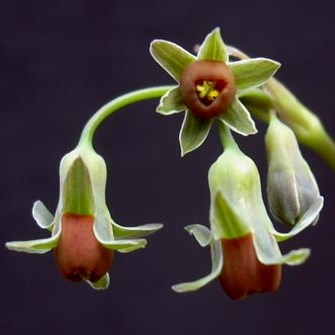
Tulbaghia acutiloba – Ishaladi Lezinyoka, Motsuntsunyane, Sefothafotha; Wild Garlic; Wildeknoffel – 5 Seed Pack
R29,75
INTERNATIONAL CUSTOMERS: Please read our shipping terms and conditions here before placing your order: Shipping Terms and Conditions
9 in stock
This genus was first described from material sent by Tulbagh in 1769. The genus Tulbaghia consists of 21 species found in Africa, mostly in southern Africa. They are characterised by the strong onion or garlic smell given off by their leaves and flower stems when bruised or cut. The genus is very closely related to Allium, and thus a member of the Alliaceae family. The genus Tulbaghia was named by Linnaeus after Ryk or Rijk Tulbagh, Governor of the Cape Colony 1751-71. He was born in Holland in 1699, enlisted with the Dutch East India Company and sailed to South Africa in 1716 and died in Cape Town in 1771. He corresponded with Linnaeus over a long period, and sent him more than 200 plant specimens.
Tulbaghia acutiloba is a South African indigenous species from the Eastern Cape, Free State, Gauteng, KwaZulu-Natal, Limpopo, Mpumalanga, North West and Western Cape Provinces. Vernacular names include Ishaladi Lezinyoka, Motsuntsunyane, Sefothafotha, Wild Garlic and Wildeknoffel. It has long narrow folded leaves and is summer-growing. In early spring it bears pendulous flowers with orange coronas and purplish reflexed perianth segments.


