
Hypoxis hemerocallidea – African Potato – 5 Seed Pack
R25,00
INTERNATIONAL CUSTOMERS: Please read our shipping terms and conditions here before placing your order: Shipping Terms and Conditions
6 in stock
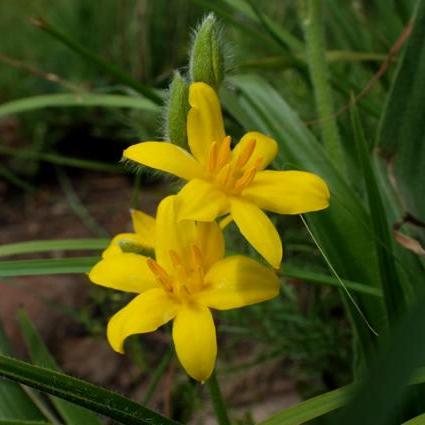
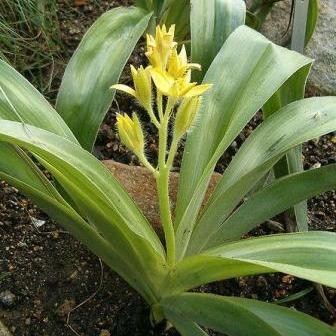
Hypoxis, a well-known genus of the family Hypoxidaceae, easily recognizable by its bright yellow star-shaped flowers and strap-like leaves, has a long history of medicinal use on the African continent and is currently being used in South Africa in primary health care as an immune booster for patients with HIV/AIDS. Being geophytic herbs, Hypoxis plants overcome winter conditions in the form of an underground rootstock called the corm. Corms are hard, fleshy, mucilaginous and white or yellow-orange within. Sliced corms, when exposed to the atmosphere, turn black with oxidation. In spring, a new set of leaves grows from the apex of the corm. In most species, leaves are arranged one above the other in three rows that radiate outwards. In some species, leaf bases are enclosed in a sheath, forming a false stem. Leaves range from linear to broadly lance-shaped, are hairy in most species and die back over the winter months. Flowering stems appear with the leaves after the first rains in spring. They are unbranched, with 2-12 flowers per stalk. Flowers are symmetrical with 6 tepals, rarely 4 or 8, are bright yellow, giving the genus its common name “yellow stars”. Only in two taxa, H. membranacea and H. parvula var. albiflora are the flowers white. The fruit is a capsule that splits across its diameter to expose the small black seeds.
Hypoxis hemerocallidea or African potato as it is better known in Southern Africa is a medicinal plant native to South Africa and is easily recognizable by its bright yellow star-shaped flowers and strap-like leaves. The African potato has a long history of medicinal use on the African continent and is currently being used in South Africa in primary health care as an immune booster for patients with HIV/AIDS. African Potato is beneficial in the treatment of Cancer, Rheumatoid Arthritis, Benign Prostatic Hypertrophy, Immunosuppression in Endurance Athletes, Diabetes, Pulmonary Tuberculosis and H.I.V. This plant is useful as an accent plant in gardens where a less formal approach to landscaping has been adopted. It is particularly useful in gardens where use is made of our local grasses as it adds an interesting contrast to the fine grass leaves.


