
Aloe beankaensis – 5 Seed Pack
R195,00
INTERNATIONAL CUSTOMERS: Please read our shipping terms and conditions here before placing your order: Shipping Terms and Conditions
9 in stock
Aloe is one of the most captivating succulent genera on Earth, celebrated for its bold architectural rosettes, resilient nature, and spectacular seasonal flower displays. From neat, miniature species that tuck themselves into rocky crevices to dramatic, stem-forming giants that dominate dry hillsides, aloes bring an unmistakable sense of place—sunlit, water-wise, and wonderfully wild—wherever they are grown.
What truly sets Aloe apart is the combination of sculptural foliage and nectar-rich blooms. The leaves range from smooth and glaucous to spotted, toothed, and richly textured, often changing colour with sun, drought, or cool weather. When they flower, aloes send up striking spikes or branched candelabras topped with tubular blooms in fiery reds and oranges, soft corals and pinks, or even yellows and greens—magnets for pollinators and a highlight in any garden or collection.
With origins spanning Africa, Madagascar, the Arabian Peninsula and surrounding regions, Aloe has evolved to thrive in demanding environments—making many species naturally suited to xeriscaping, rock gardens, containers, and drought-tolerant landscapes. Whether you’re a first-time grower or a seasoned collector, raising aloes from seed is especially rewarding: every plant tells a slightly different story, and each one matures into a unique, living sculpture that becomes more impressive with every season.
Aloe beankaensis
Aloe beankaensis is a rare Madagascan treasure for serious aloe collectors and adventurous gardeners alike. Endemic to the famous Beanka limestone region of western Madagascar, this species is still seldom seen in cultivation and is usually traded under its botanical name, with no formally established common name (though some enthusiasts affectionately call it the “Beanka aloe”). Seed-grown plants give you the chance to grow this sought-after species from the very beginning and enjoy its character as it develops over the years.
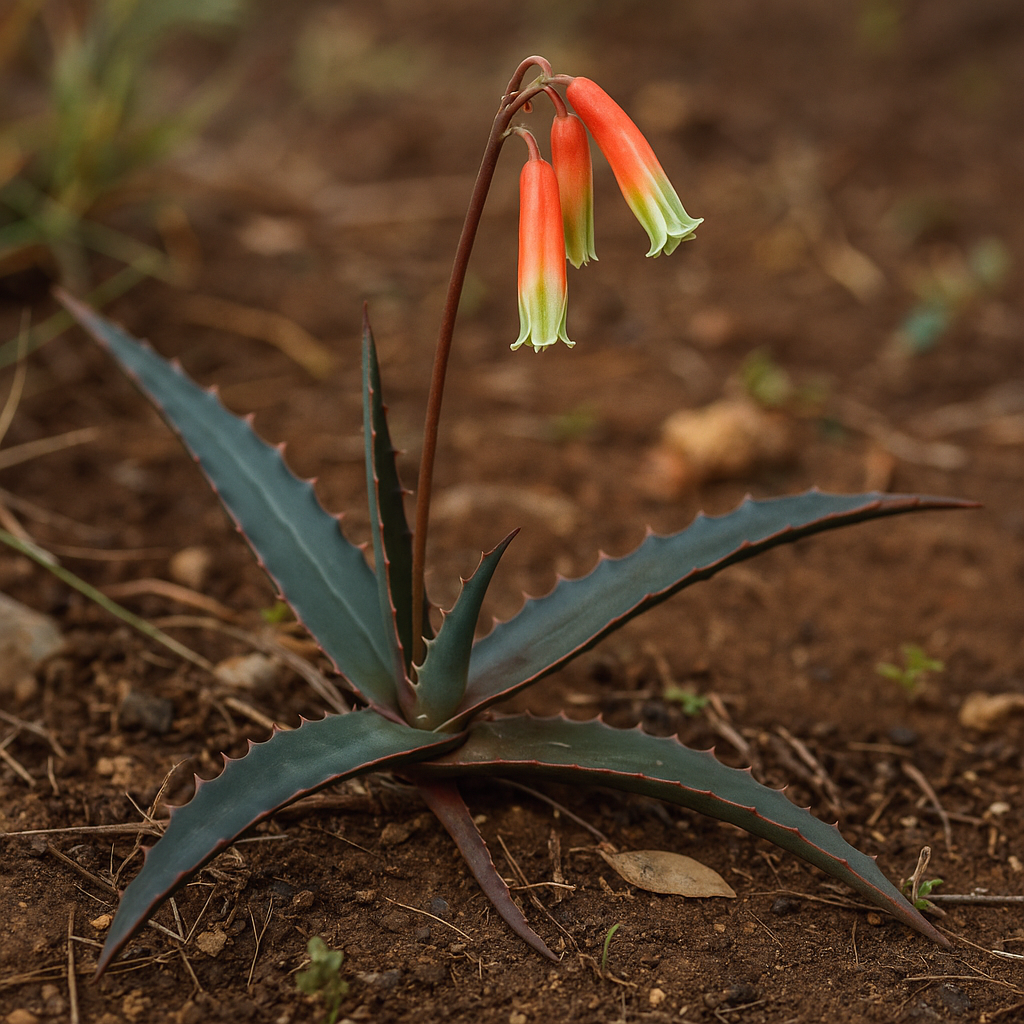
Plants form low, spreading rosettes with long, narrow, slightly arching leaves that match the photos: deep blue-green to slate, often flushed plum or chocolate in strong light or drought. The leaf surfaces are smooth yet tough, with a faint, mottled striping and a bloom that gives a soft, matte sheen. Along the edges runs a line of prominent, triangular teeth in a paler, horn-coloured shade, giving the rosette a fierce, sculptural look that sits beautifully against stone or gravel. Mature plants produce slender flower stalks topped with small clusters of nodding tubular blooms in warm coral-orange, tipped soft green at the mouth – a vivid contrast to the dark foliage. Flowering is usually in the cooler, drier months from late winter into spring, when the plants are in peak condition.
In the wild, Aloe beankaensis clings to rocky limestone slopes and ledges, rooting into pockets of gritty soil where drainage is extreme and rainfall is scarce. This makes it an excellent candidate for water-wise gardens in South Africa and other warm, dry regions worldwide. Give it a position in full sun or very bright light, in a raised bed, rock garden, terracotta container or shallow bonsai-style pot filled with sharply draining, mineral-rich mix. Once established it is highly drought tolerant, but it appreciates occasional deep watering in the growing season and a drier rest in winter. Protect from heavy frost or prolonged wet and cold; in colder climates it is best grown in a greenhouse, conservatory or sunny windowsill.
From seed, Aloe beankaensis rewards a little patience with strong, characterful plants that quickly show their unique, dark, spiny personality. Sow in a warm spot (around 20–25 °C) in a fine, well-drained succulent mix, barely covering the seeds and keeping the medium just lightly moist until germination. Each seedling will develop its own subtle variation in leaf colour and spotting, making a tray of young plants already interesting to look at. Whether you are building a Madagascan-themed collection, enriching a South African rockery, or simply looking for something truly different, this rare species offers a combination of toughness, elegance and botanical exclusivity that is hard to beat.


